Pilates and yoga are both slow, done on a mat and focused on breathing, so many people mix them up. In fact the two practices have different roots and different goals, and they often work best together.
Where they come from
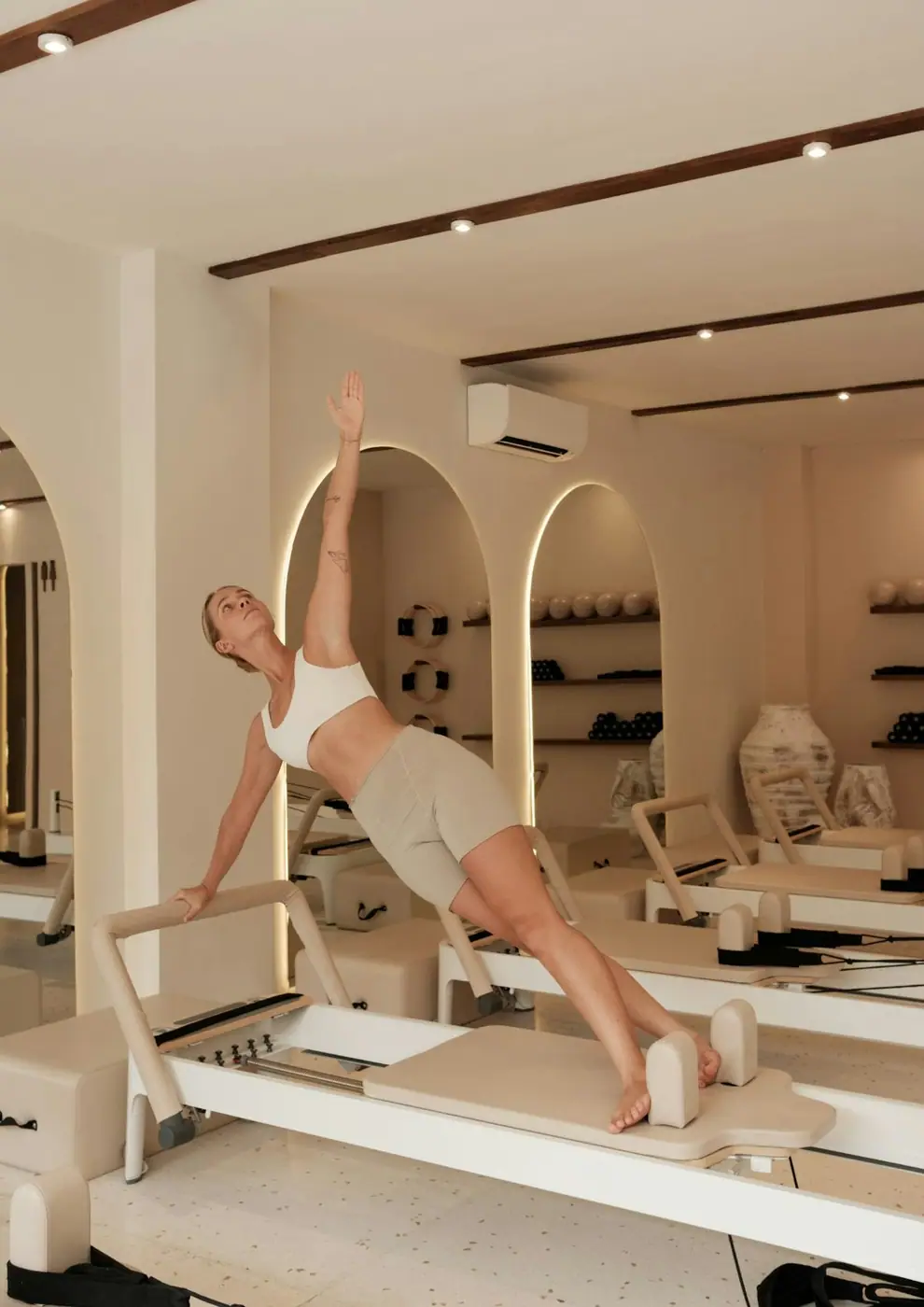
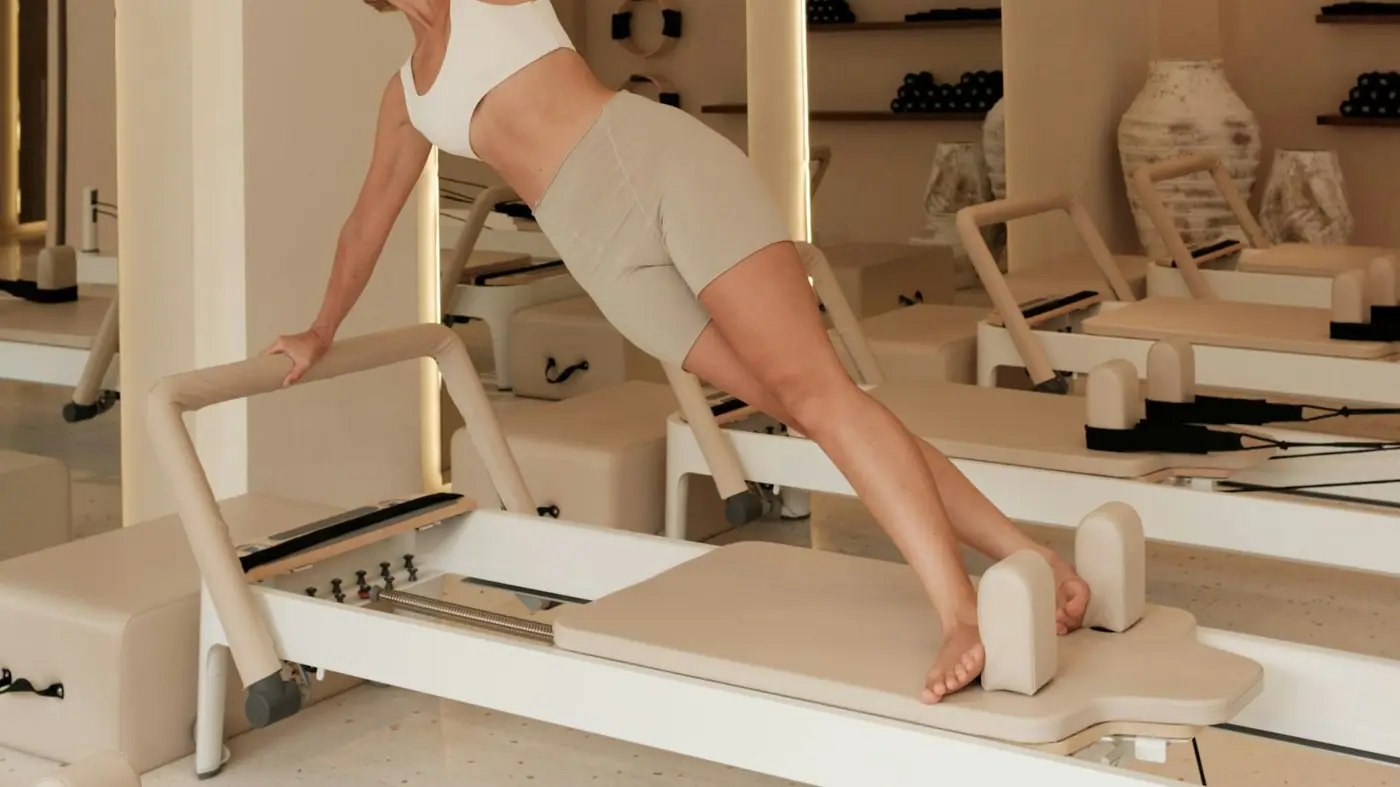
Yoga comes from India and is thousands of years old. Beyond the physical poses (asanas) it includes breathing, meditation and philosophy. Pilates was created in the 1920s by Joseph Pilates as a method for strength, control and rehabilitation. He called it “Contrology”, and he also invented the Reformer machine.
The main differences
On the surface they look alike. Up close, they ask different things of your body and your attention.
| Pilates | Yoga | |
|---|---|---|
| Main goal | Strength of the deep core muscles, control and alignment | Flexibility, balance and a calm mind, through poses, breath and meditation |
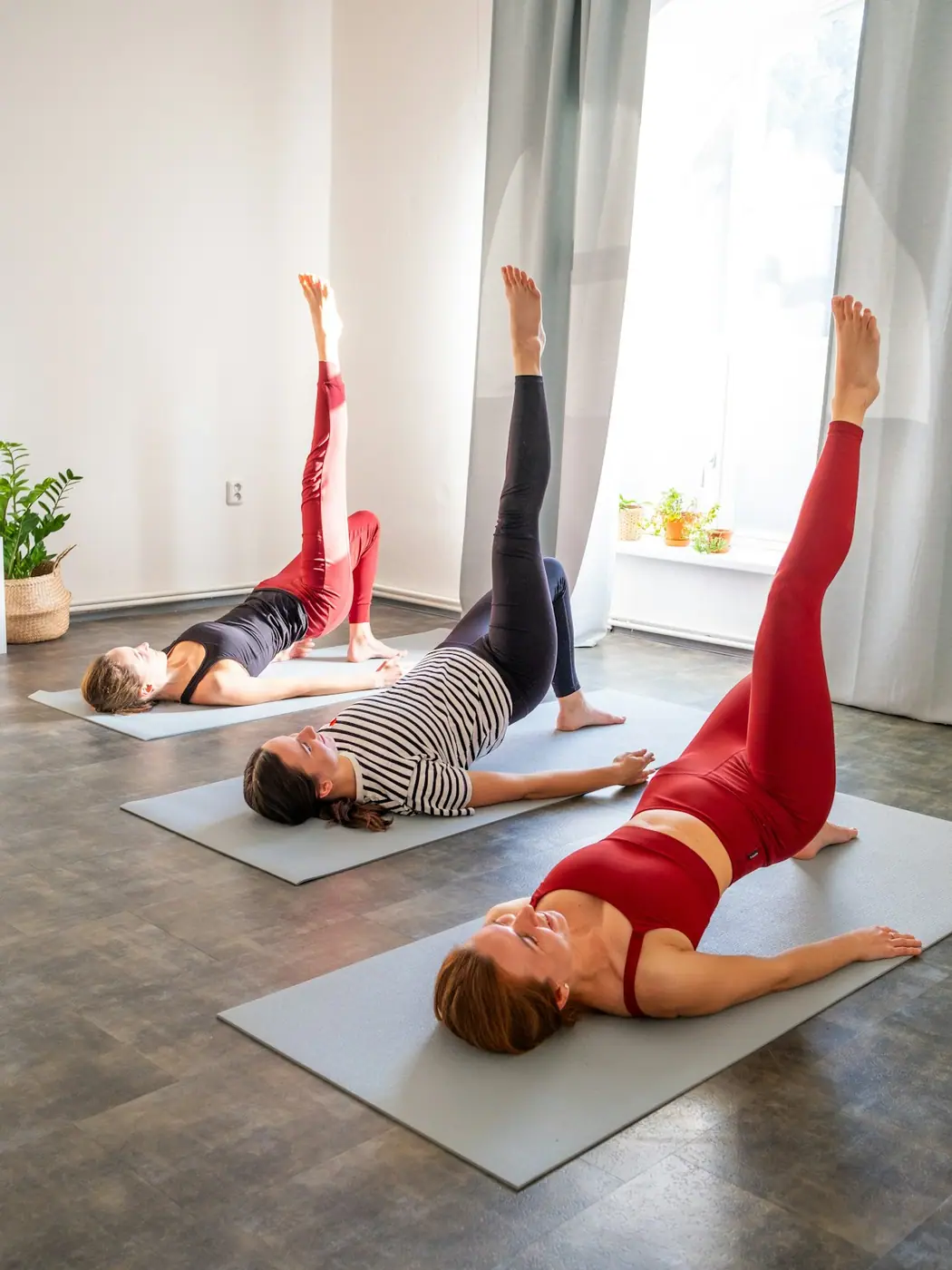
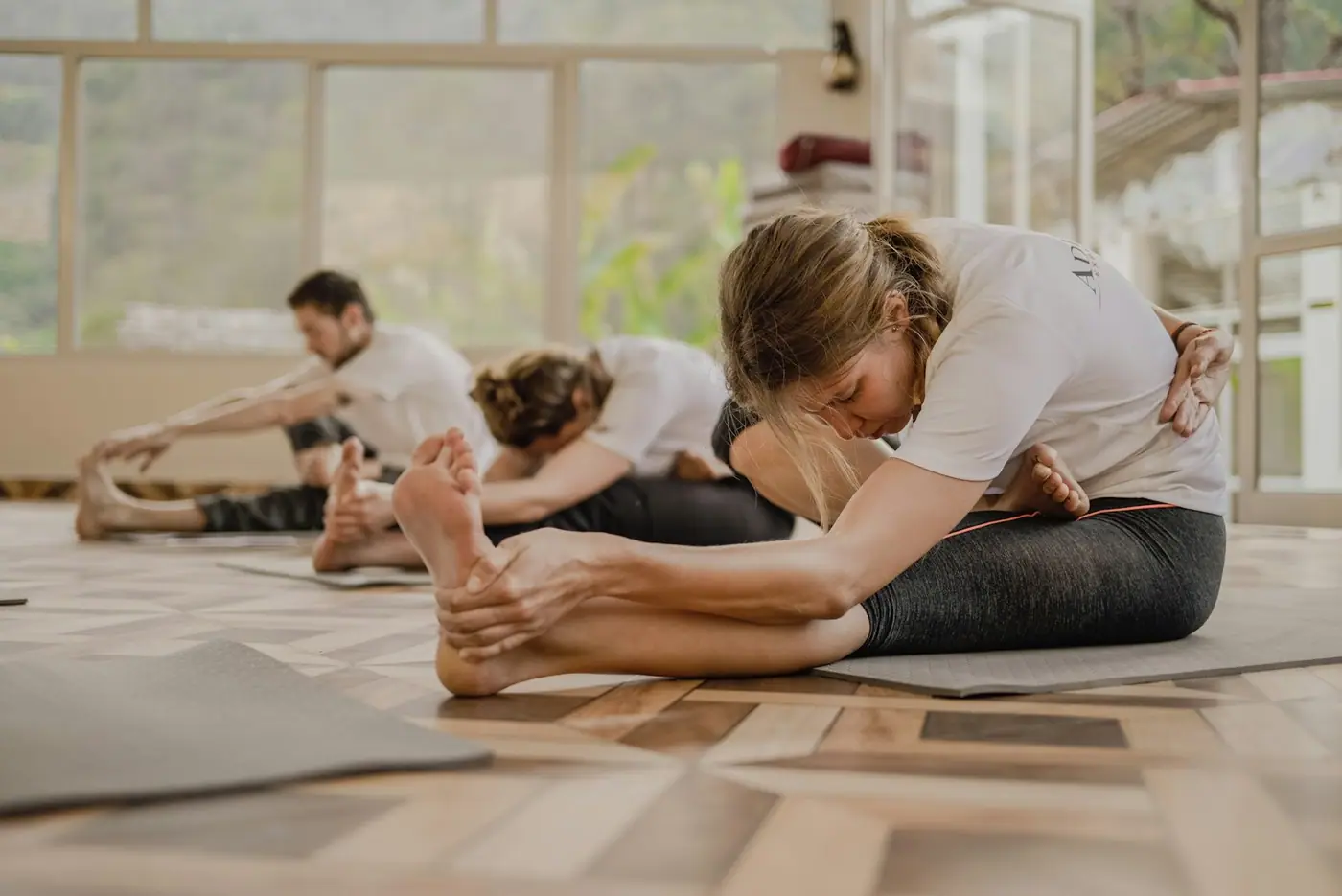
| How you move | Controlled repetitions, arms and legs moving from a stable centre | Poses held for several breaths, or flowing sequences |
| Breathing | “Into the ribs”, exhaling on effort to engage the core | Often through the nose, slow, to quieten the nervous system |
| Equipment | Mat, plus the Reformer and other spring-loaded machines | Mat, sometimes blocks and straps |
| Resistance | Body weight on the mat; adjustable springs on the Reformer | Body weight |
| The mind side | Concentration on precise movement | Breath work, relaxation and meditation are part of the practice |
What the research says
Both practices have been studied quite a lot, mostly in people with back pain, in older adults and in people with stress or anxiety. Below is the honest picture from systematic reviews and meta-analyses, which pool many trials and are the strongest kind of evidence. One caveat up front: most of these trials are small, and the certainty of the evidence is usually low to moderate.
Back pain
The largest comparison so far pooled 118 trials and ranked exercise types for adults with chronic low back pain. Almost every type of exercise helped compared with no exercise, and Pilates came out on top for both pain and disability. The most beneficial programmes included one to two Pilates or strength sessions a week, sessions under 60 minutes, and programmes lasting 3 to 9 weeks 1. The Cochrane review of Pilates is more cautious: low- to moderate-quality evidence that Pilates reduces pain and disability compared with minimal intervention, but no conclusive evidence that it is better than other forms of exercise 2.
For yoga, the Cochrane review found that compared with no exercise it gives small improvements in pain and back function at three months, which the authors judged too small to be clinically important. Compared with other back-focused exercise there was probably little or no difference. Yoga had more side effects than doing nothing, mostly a temporary increase in back pain, but about the same as other exercise 3. So for your back, both are reasonable; Pilates has slightly stronger signals, and the most important thing is to keep moving with a qualified instructor. Read where to start with back pain.
Neck pain: the direct comparison
Studies that put Pilates and yoga side by side are rare. In one, 56 people with chronic neck pain did 12 small-group sessions of Pilates or yoga supervised by a physiotherapist, or were in a control group. Both exercise groups improved disability and pain, there was no difference between them and no adverse effects. Neither group showed measurable changes in range of movement or posture 4.
Stress and anxiety
Here yoga has the clearer evidence. A meta-analysis of 8 trials (319 people) found small short-term reductions in anxiety compared with no treatment in people with elevated anxiety; for diagnosed anxiety disorders the evidence was inconclusive 5. Research on Pilates and anxiety is thinner, so we won't claim more than this: many of our clients say that the concentration a Pilates class demands is exactly what switches off a busy head.
Balance and flexibility
Both improve balance, mostly studied in older adults. A meta-analysis of 6 trials (261 older adults) found better postural balance with Pilates 6, and another of 6 trials (307 people aged 60+) found small improvements in balance and medium improvements in mobility with yoga 7. Yoga is known for flexibility, but Pilates helps too: a 2026 meta-analysis of 12 studies in adult women found better sit-and-reach flexibility after Pilates programmes, while asking for cautious interpretation because the studies differed a lot 8. We found no good head-to-head trials of flexibility, so “yoga makes you more flexible than Pilates” is more tradition than proven fact.
| Area | Pilates | Yoga |
|---|---|---|
| Chronic low back pain | Helps more than minimal care; ranked first among exercise types 12 | Small benefit vs no exercise; similar to other exercise 3 |
| Chronic neck pain | Less pain and disability, same as yoga 4 | Less pain and disability, same as Pilates 4 |
| Anxiety and stress | Little research so far | Small short-term effect in elevated anxiety 5 |
| Balance (older adults) | Better postural balance 6 | Small gain in balance, medium in mobility 7 |
| Flexibility | Better sit-and-reach in adult women 8 | Central to the practice; no head-to-head trials found |
| Certainty | Mostly low to moderate | Mostly low to moderate |
Sources: [1]–[8], see the list at the end of the article.
Which is better for…
- …lower back pain: both help; Pilates has a slight edge in the research 1, but the best exercise is the one you'll keep doing.
- …posture: Pilates trains the muscles that keep you upright, but studies haven't shown measurable posture changes yet 4. More in Pilates for posture.
- …flexibility: both. Yoga stretches more by design; Pilates improves it too 8.
- …stress: yoga has the stronger evidence 5; Pilates offers focus that quiets busy thoughts.
- …strength and tone: Pilates, especially on the Reformer, where springs add adjustable resistance.
Can you combine them?
Yes, and it's a great idea. Pilates builds the strength that protects your joints in harder yoga poses, and yoga adds flexibility and calm. Many of our clients come to Pilates twice a week and practise yoga once, which also fits the one to two Pilates sessions a week that worked best for back pain 1.
How to try Pilates
Start with a Mat class or Reformer Foundations. No experience needed. See also what to expect at your first class.
Frequently asked questions
Which is easier for beginners, Pilates or yoga?
Both offer beginner classes. Reformer Pilates is often easier to learn because the machine guides the right movement and supports the body.
Which helps more with weight loss?
Neither is a cardio workout. Both are light to moderate activity, so on their own neither is a strong weight-loss tool. Weight loss depends mostly on food and how much you move during the day.
Can I do Pilates and yoga in the same week?
Yes. Two Pilates classes and one yoga class a week, for example, is a very good balance of strength and flexibility.
Sources
- Fernández-Rodríguez R, Álvarez-Bueno C, Cavero-Redondo I, et al. (2022). Best Exercise Options for Reducing Pain and Disability in Adults With Chronic Low Back Pain: Pilates, Strength, Core-Based, and Mind-Body. A Network Meta-analysis. Journal of Orthopaedic & Sports Physical Therapy, 52(8), 505–521. doi:10.2519/jospt.2022.10671
- Yamato TP, Maher CG, Saragiotto BT, et al. (2015). Pilates for low back pain. Cochrane Database of Systematic Reviews, (7), CD010265. doi:10.1002/14651858.CD010265.pub2
- Wieland LS, Skoetz N, Pilkington K, et al. (2022). Yoga for chronic non-specific low back pain. Cochrane Database of Systematic Reviews, (11), CD010671. doi:10.1002/14651858.CD010671.pub3
- Dunleavy K, Kava K, Goldberg A, et al. (2016). Comparative effectiveness of Pilates and yoga group exercise interventions for chronic mechanical neck pain: quasi-randomised parallel controlled study. Physiotherapy, 102(3), 236–242. doi:10.1016/j.physio.2015.06.002
- Cramer H, Lauche R, Anheyer D, et al. (2018). Yoga for anxiety: A systematic review and meta-analysis of randomized controlled trials. Depression and Anxiety, 35(9), 830–843. doi:10.1002/da.22762
- Casonatto J, Yamacita CM. (2020). Pilates exercise and postural balance in older adults: A systematic review and meta-analysis of randomized controlled trials. Complementary Therapies in Medicine, 48, 102232. doi:10.1016/j.ctim.2019.102232
- Youkhana S, Dean CM, Wolff M, et al. (2016). Yoga-based exercise improves balance and mobility in people aged 60 and over: a systematic review and meta-analysis. Age and Ageing, 45(1), 21–29. doi:10.1093/ageing/afv175
- Bajčetić Č, Rudović V, Novaković M, et al. (2026). Effects of Pilates Programs on Body Composition, Flexibility, Muscular Strength, Balance, Functional Performance and Respiratory Function in Adult Women: A Systematic Review and Meta-Analysis. Sports, 14(9), 407. doi:10.3390/sports14090407
Sources last checked: 20 October 2026